
Canadian Friends of the École Biblique
La Bible en ses Traditions – Publication of a Volume on the Psalms
As part of the La Bible en ses Traditions project of the École biblique et archéologique française de Jérusalem (ÉBAF), Peeters Publishers has recently released a work by Marc Girard, Le Psautier. Livre Ier (Ps 1–41). Bonheurs de l’homme (Leuven: Peeters, 2024. II–591 p. ISBN: 9789042950788; E-ISBN: 9789042950795. €150).
For each of Psalms 1 to 41, the volume presents, side by side, a new translation, as literal as possible, of the Hebrew Masoretic text, along with the Syriac, Greek, and Latin versions. A series of notes then follows, grouped under three headings. Under the Text, the author analyzes textual variants, vocabulary, grammatical features, composition, and literary genre. Under Context, he explains, when relevant, the Sitz im Leben of each psalm in its spatial, temporal, and cultural setting. Under Reception, he explores how the Hebrew text was understood in the ancient versions, identifies terminological and thematic connections with the rest of the Bible and para-biblical writings, traces its interpretation by major Jewish and Christian commentators through the centuries, and examines its echoes in liturgy, Islam, literature, magisterial documents, philosophy, contemporary visual art, and music.
Assisted by a few collaborators and interns, Canadian scholar Marc Girard, Professor Emeritus at the Université du Québec à Chicoutimi and research professor at the ÉBAF, was responsible for the translations, the organization of the material, and the writing of the notes in all sections. His work received financial support from the Canadian Friends of the École Biblique. We offer him our warm congratulations and best wishes for continued success in his research.
Dear Friends and Colleagues,
On this February 2nd, which concludes the great cycle of Christma celebrations, we are (still) at the beginning of the calendar year… Not too late to send our wishes for happiness and peace to those of you who havne’t yet received them—a word that is not an empty one for us, inhabitants of Jerusalem!
In these times of beginnings, the construction of our digital cathedral opens a new phase of work on the work of creation. How, according to the biblical imagination, did the Creator compose the world? This will involve a systematic annotation of biblical cosmology in the section “environment of life.” Even in common translations, the Bible presents us with upper chambers, abysses, Sheol, pillars of the earth…but what are they? We will answer this point by point throughout the year. We begin with an initial overview.
Incidentally, Saint Jerome shows us how the first Latin translators sought to make this universe more familiar to their readers: they didn’t hesitate to include Tartarus, Cocytus, Orion, and the Pleiades…
Beyond space, beginning the year also means hearing once again the call of wisdom to make good use of the time given to us: “Teach us to number our days, that we may gain wisdom of heart” (Psalm 90:12). Let us do this in the company of Saint Paul!
Finally—and perhaps most importantly—a new digital chapter opens. Thanks to Peter’s zeal (meet him below), an improved and faster version of the BibleArt mobile app is now available. If you were already using the previous version, unpin it from your devices, then reopen BibleArt.com in your browser (not in an app store!) before pinning it again.
Happy discoveries! We’re counting on you to spread the word about BibleArt as a daily reference tool: if each of you convinces just one more person, our community will double.
With friendship from Jerusalem,
Frère Olivier-Thomas Venard, o.p.
director of of The Bible in its Traditions
with and for the Editorial Committee, research assistants in residence
Like any ongoing project, our tool is constantly being improved. We appreciate your patience if you experience any delays in loading notes.
COMPLETED WORK
 Foundations
In the Translator’s Workshop!
Various Facets of Our Art and Translation
Tartarus, Cocytus & the Pleiades
Those who transmitted the Scriptures to the Western world “inculturated” them. For example, they replaced the names of pagan gods from the Middle East, little known in Rome, with those of deities from Greco-Roman mythology.
The description of the cosmos itself was affected: several cosmic, geographical, and mythological entities familiar to the Romans thus found their place in the Bible!
At the very bottom, the sinister “Tartarus” and the gloomy “Cocytus,” but also at the very top, the luminous Hyades, Pleiades, and other stars.
Word of the Month
Words discovered, rediscovered, or suggested throughout our translation work
To regain confidence at the start of the new year, by entrusting ourselves to Divine Providence, let us meditate, in the spirit of Saint Paul and ancient and biblical wisdom, on a proverb related to the wise use of time—and especially of time just beginning.
“I am confident that he who began a good work in you will bring it to completion.”

Walls & Buttresses
 Contexts: Welcome to our world!
Topography, archaeology, sociology, ancient cultures
With no other aim than to be descriptive, this is a note to help imagine the “spaces” designated and organized by the great biblical poem and to situate some of their inhabitants within them.
Several notes already exist on the various parts of this cosmos, which we will expand upon, and we will create those that are missing, over the coming year.
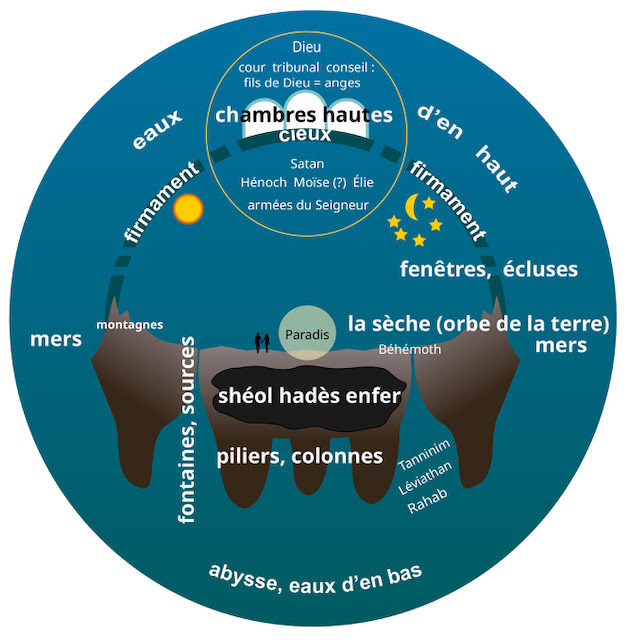
Schematic approximation of a biblical cosmography, (c) BEST aisbl
Ornaments
 Reception
The Bible in Culture
The biblical cosmos is both a “phenomenological” description of reality and a spiritual ordering of the universe, where heaven, earth, and the abyss manifest the sovereignty of the Creator. It has profoundly influenced the Western visual imagination, providing artists with a framework for thinking about the relationship between humanity and the world. Here are a few reflections.
The artists and the biblical cosmos
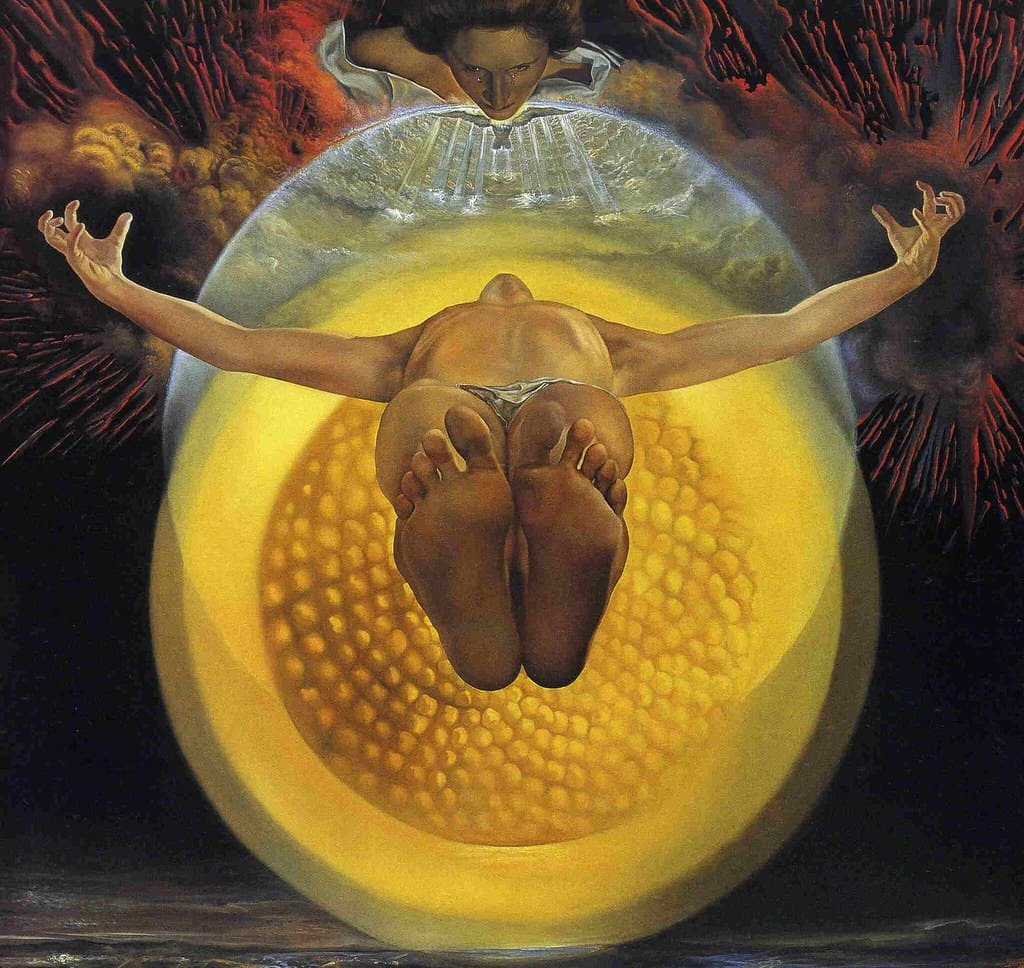
Christ is at the heart of the cosmos in the work of several geniuses of 20th-century painting.
I support the enrichment of BibleArt’s translations and annotations.
PROJECT MONITORING
Portrait of the Month
The floor is given to the builders of our biblical cathedral.
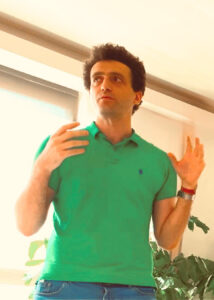 Pierre H., director of Janalis, is our developer for the BibleArt application.
BibleArt, for me…
In my opinion, the Bible is first and foremost a foundational corpus of stories, languages, and traditions that have profoundly influenced history, art, and societies.
BibleArt is a modern and collaborative way to read this text as a living cultural object, adding layers of context, references, and media. Technically, it is primarily a collective project where the tool serves the group’s collective intelligence and facilitates cross-disciplinary exploration of the content.
My motto…
“Understand before you buy in, contextualize before you interpret”: it’s an approach I apply as much to software development as to reading ancient texts.
My favourite book in the Bible…
Ecclesiastes (Qohelet), for its surprisingly lucid and almost disillusioned tone.
It reads very well, regardless of any belief, as a philosophical reflection on time, human effort, and the limits of certainty. These are themes that also resonate with technical and collaborative work, don’t they?
THE FLOOR IS YOURS
“Thank you for your work. I’m not a professional biblical scholar, but knowing I can access your publications is very reassuring. Thank you, it’s magnificent, but also so vast… And the Gregorian chants are a real bonus.”
Pierre L.
loyal user of BibleArt
Each month, we share the progress of the BibleArt project: new developments related to the biblical text, new insights into the context surrounding Scripture, and new developments concerning the reception of the biblical text, particularly within the cultural sphere. We also feature in-depth analyses of specific themes or topics, interviews, profiles, and personal accounts.
More on “The Bible in Its Traditions”